
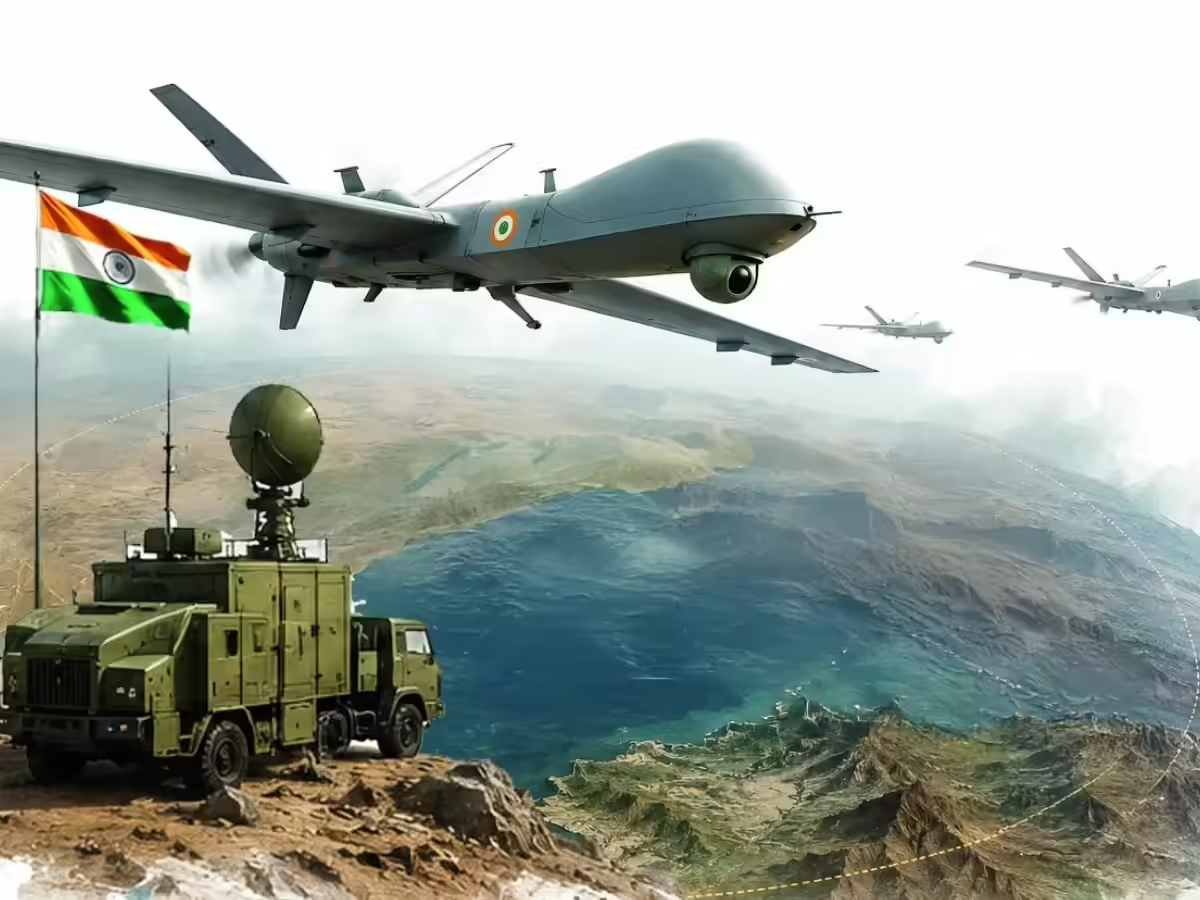

Strategic Move to Enhance Long-Range Strike Capability; Several Defence and Drone Stocks Poised to Benefit from Increased Procurement Demand
The Indian Army is actively exploring the development and induction of indigenous one-way attack drones (also known as loitering munitions or kamikaze drones) with a striking range of up to 1,000 kilometres. This ambitious initiative marks a significant step in India’s efforts to strengthen its long-range precision strike capabilities while reducing dependence on foreign suppliers.
The move aligns with the government’s Atmanirbhar Bharat vision in defence and comes amid evolving regional security challenges. Sources indicate that the Army has initiated discussions with domestic defence manufacturers and research institutions to fast-track the development of these advanced unmanned systems.
Strategic Importance
One-way attack drones represent a game-changing technology in modern warfare. Unlike traditional drones that return to base, these systems are designed to loiter over a target area before striking with precision. A 1,000-km range would give the Indian Army the ability to engage high-value targets deep inside adversary territory without risking manned aircraft or putting soldiers in harm’s way.
Defence analysts believe that such drones will be crucial in future conflicts, particularly in high-altitude border areas and maritime domains. The development of indigenous systems will also help India avoid export restrictions and technology denial regimes that often accompany foreign purchases.
Government and Army Focus
The Indian Army has been prioritising unmanned systems as part of its modernisation drive. The successful use of drones in recent global conflicts has further reinforced the need for a robust indigenous drone ecosystem. The 1,000-km range target reflects the Army’s desire to match or surpass the capabilities of similar systems being developed by China and other regional players.
The Defence Research and Development Organisation (DRDO) is expected to play a key role in this project, collaborating with private industry partners to accelerate development and production.
Stocks Likely to Benefit
The announcement is expected to have a positive impact on several Indian defence and aerospace companies. Key stocks that could benefit include:
- Bharat Electronics Ltd (BEL): Strong player in defence electronics and drone systems; likely to see increased orders for sensors and communication equipment.
- Hindustan Aeronautics Ltd (HAL): Already involved in various drone projects; could gain from integration and manufacturing contracts.
- Larsen & Toubro (L&T): Major player in defence manufacturing; well-positioned for structural and systems integration work.
- Bharat Forge: Expertise in advanced materials and precision components; could benefit from high-value drone component contracts.
- IdeaForge Technology: One of India’s leading drone manufacturers; potential for direct involvement in the program.
- Tata Advanced Systems: Part of the Tata Group’s defence push; likely to play a significant role in development and production.
These companies are expected to see increased investor interest as the project progresses and more contracts are awarded.
Challenges Ahead
While the initiative is promising, several challenges remain. Developing reliable 1,000-km range one-way drones requires advancements in propulsion, navigation, artificial intelligence for target recognition, and secure communication systems. Ensuring cost-effectiveness and scalability will also be critical.
The Army will need to work closely with the private sector to overcome these technological and production hurdles. Regulatory support and faster clearance processes will be essential for timely execution.
Broader Impact
This project is part of India’s larger strategy to build a robust indigenous defence industry. Successful development of these drones could open export opportunities and position India as a key player in the global unmanned systems market.
The announcement also sends a strong signal to adversaries about India’s growing capabilities in precision strike technology. As regional security dynamics continue to evolve, such indigenous systems will play a crucial role in maintaining strategic deterrence.
What Lies Ahead?
The Indian Army is expected to issue detailed requirements and begin the procurement process in the coming months. Multiple Indian companies are likely to participate in development and production partnerships.
The successful execution of this project could mark a new chapter in India’s defence self-reliance journey, significantly enhancing the country’s military capabilities while boosting the domestic defence manufacturing ecosystem.
