
Relief for India’s EV and Electronics Sectors After Months of Delays; Approvals Include Suppliers to Maruti, Mahindra, and Honda
Introduction
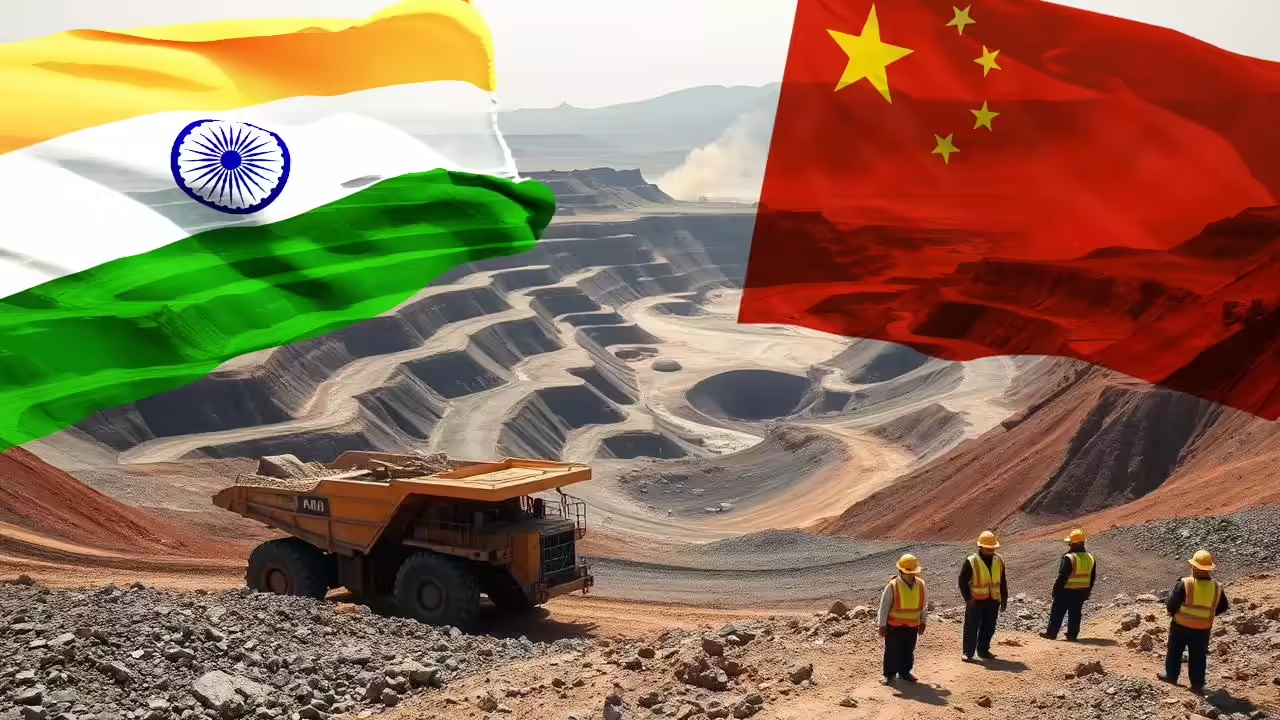
In a significant development for India’s manufacturing sector, China has started issuing export licenses for rare earth magnets (REMs) to Indian companies, easing supply disruptions that have persisted since April 2025. According to government officials, approvals are being granted gradually through Chinese suppliers to both domestic firms and Indian units of foreign companies. This move provides relief to key industries like electric vehicles (EVs), automobiles, electronics, and medical equipment, which rely heavily on these critical components. The licenses come with conditions, including guarantees against dual-use or defense applications and no re-export to restricted destinations like the US.
Background: Months of Supply Crunch
China, which controls over 90% of global rare earth magnet production and processing, imposed export licensing requirements in April 2025 amid escalating trade tensions. This led to delays and halted shipments to India, prompting warnings from automakers like Maruti Suzuki and Mahindra about potential production disruptions, especially in EVs. Despite diplomatic engagements including assurances from Chinese Foreign Minister Wang Yi in June supplies remained stalled until recent clearances.
Initial approvals in October went to companies like Jay Ushin, De Diamond Electric India, and Indian subsidiaries of Continental AG and Hitachi Astemo. The latest batch includes suppliers to Mahindra & Mahindra, Maruti Suzuki, Honda Scooters and Motorcycles, and Bosch, marking broader progress.
Key Beneficiaries and Conditions
The approvals cover a range of suppliers, enabling imports for automotive components. However, the process remains slow and case-by-case, with strict end-user certificates required to confirm non-military use. Officials note that while some applications are clearing, the majority are still pending, and the pace is cautious.
This partial resumption follows months of bilateral talks and aligns with China’s selective easing for other markets. For India, it addresses immediate shortages estimated at 870 tonnes for the auto sector in FY26 while highlighting ongoing vulnerabilities.
Impact on Indian Industries
Rare earth magnets, primarily neodymium-based, are essential for high-performance EV motors, wind turbines, speakers, and medical devices. The delays had raised costs and threatened production schedules, particularly for EVs where India aims for 30% penetration by 2030.
With licenses flowing, manufacturers can rebuild inventories, stabilizing supply chains. However, experts caution that full normalization may take time, urging diversification. India’s domestic efforts, including beach sand mining and partnerships for processing, are accelerating but years from scale.
Broader Geopolitical Context
China’s controls were initially a response to US tariffs, but ripple effects hit global chains. The selective approvals for India signal pragmatic trade adjustments amid improving bilateral ties post-2020 border tensions. Yet, conditions against re-export to the US reflect ongoing US-China frictions.
Outlook: Cautious Optimism
Industry leaders welcome the development but stress the need for sustained flow. This is a positive step, but we need consistent supplies to meet growth targets, said a senior auto executive. With EV demand surging and electronics exports rising, reliable REM access is crucial for India’s $300 billion manufacturing ambition by 2030.
As more licenses are processed, the sector breathes easier, but long-term self-reliance remains the goal. This easing could pave the way for smoother trade in other critical materials.
