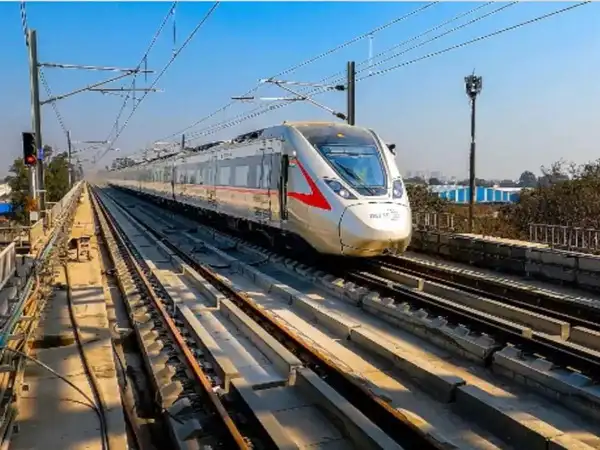

New Delhi: Improved urban mobility infrastructure especially metro rail, bus rapid transit (BRT), multi-modal integration, and last-mile connectivity has delivered measurable financial relief to Indian households, according to a new working paper released by the Economic Advisory Council to the Prime Minister (EAC-PM).
The paper, titled “Urban Mobility as a Household Wealth Multiplier”, estimates that better public transport access has increased average household disposable income by ₹18,200–₹24,700 per year in Tier-1 and Tier-2 cities through four primary channels:
- Lower commuting costs (savings of ₹9,800–₹14,200 annually per household)
- Higher female labour-force participation (adding ₹4,500–₹7,800 per household in cities with metro/BRT)
- Reduced vehicle ownership & maintenance burden (₹3,200–₹5,100 saved per year)
- Increased access to better-paying jobs (productivity-linked income gain of ₹1,200–₹3,600)
Key Findings from the EAC-PM Working Paper
- Households living within 1 km of a metro station save ₹1,450–₹1,920 per month on transport compared to similar households farther away.
- Cities with operational metro systems show 11–17% higher female LFPR in the 25–45 age group compared to non-metro cities of similar size.
- Two-wheeler-dependent households in metro-connected areas reduced vehicle replacement frequency by 18–24 months, translating to ₹28,000–₹42,000 cumulative savings over five years.
- Time saved in commuting (average 38–52 minutes per day) is being redirected toward side-gig work, skill upgradation, or family care, adding indirect income.
Sectoral & City-Level Impact
- Delhi-NCR, Mumbai & Bengaluru recorded the highest per-household savings (₹22,000–₹27,000 annually).
- Ahmedabad, Pune, Hyderabad & Lucknow showed mid-range gains (₹16,000–₹21,000).
- Smaller metro cities (Kochi, Jaipur, Chandigarh) still delivered ₹11,000–₹15,000 in annual savings per household.
The paper notes that every 1 percentage point increase in public transport modal share correlates with a 0.6–0.9 percentage point rise in female workforce participation in urban areas.
Policy Implications & Government Response
EAC-PM member & lead author Dr. Sanjeev Sanyal remarked:
“Urban mobility is no longer just about reducing congestion — it has become one of the most powerful household financial inclusion levers. Every rupee invested in high-quality public transport yields multiple rupees in household savings and productivity gains.”
The findings are expected to strengthen the case for accelerated funding under:
- PM-eBus Sewa
- Metro & RRTS expansion (target: 25 new metro cities by 2030)
- National Urban Transport Policy 2026 update
Union Housing & Urban Affairs Minister Shri Manohar Lal Khattar welcomed the paper and said the ministry is already factoring these household-level benefits into cost-benefit models for upcoming transit projects.
Conclusion
The EAC-PM research provides strong empirical backing for continued heavy investment in urban public transport. By lowering transport costs, enabling greater female participation, and freeing up household budgets, metro and mass-transit systems are quietly acting as one of the most effective “wealth creators” for urban middle-class and lower-middle-class families in India.
As India races toward a $5 trillion economy, efficient urban mobility is emerging not just as infrastructure but as a powerful engine of household financial resilience and inclusive growth.
