
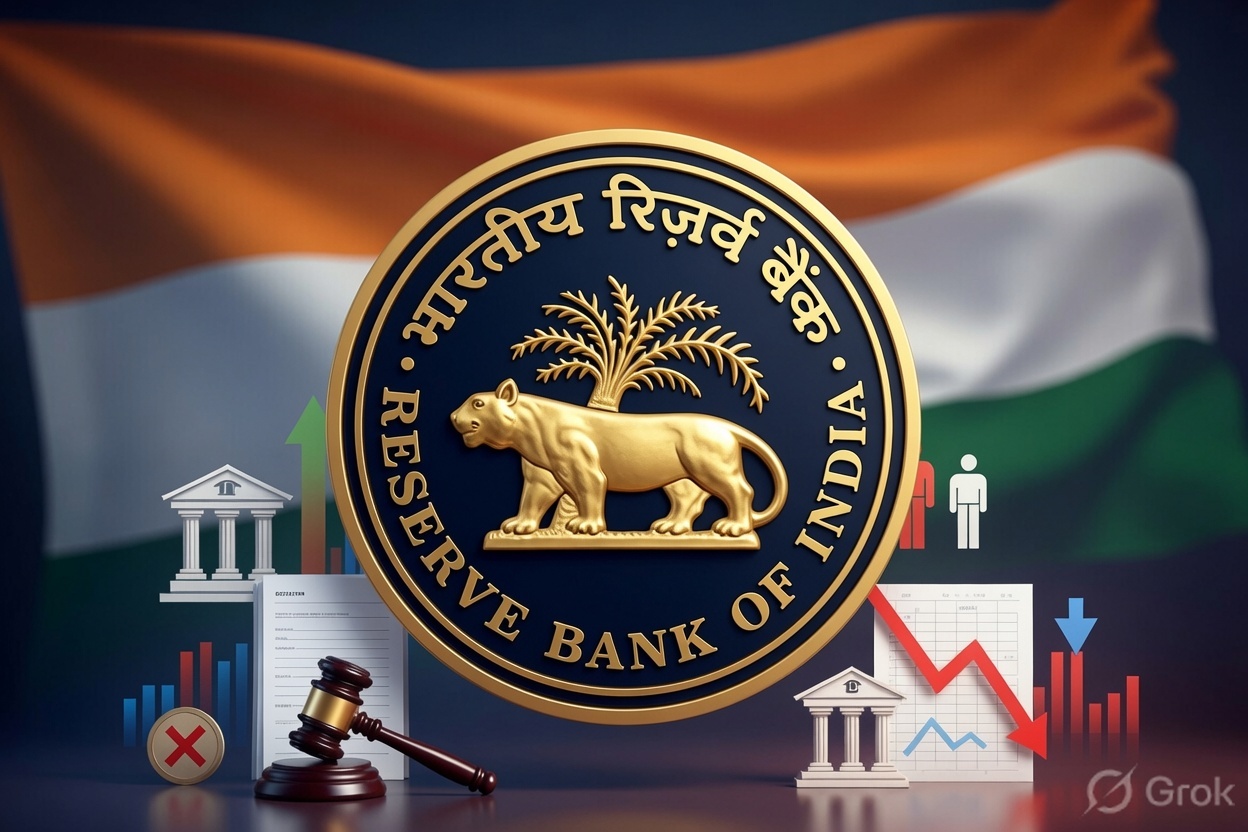

Central Bank’s Massive Forex Intervention Raises Questions on Sustainability and Future Policy Direction
The Reserve Bank of India (RBI) is confronting a significant $100 billion challenge following its aggressive defense of the Indian rupee in recent months. The central bank’s record intervention in the foreign exchange market has successfully stabilized the currency but has also led to a substantial depletion of reserves, raising concerns about long-term sustainability and future monetary policy options.
Record Currency Defense
In a bid to prevent excessive volatility and a sharp depreciation of the rupee, the RBI intervened heavily in the forex market. According to sources and market estimates, the central bank spent close to $100 billion in the last few months to defend the currency. This is among the largest forex interventions by the RBI in recent history.
The rupee had come under severe pressure due to a combination of factors including:
- Rising global oil prices
- Persistent foreign institutional investor (FII) outflows
- Strengthening US dollar
- Geopolitical tensions in the Middle East
Impact on Forex Reserves
The massive intervention has led to a noticeable decline in India’s foreign exchange reserves. While the reserves still remain at comfortable levels, the pace of depletion has raised eyebrows among economists and market watchers. The RBI has been using its forex reserves as a first line of defense to maintain stability in the currency market.
Challenges Ahead for RBI
The central bank now faces multiple challenges:
- Rebuilding Reserves: The RBI will need to carefully manage its intervention strategy to rebuild depleted reserves without causing volatility.
- Balancing Growth and Stability: With inflation concerns and growth pressures, the RBI has to strike a delicate balance between currency management and monetary policy.
- Global Factors: External factors such as US Fed policy, global oil prices, and geopolitical developments will continue to influence the rupee’s trajectory.
- Market Expectations: The market is closely watching the RBI’s next moves, especially regarding interest rates and liquidity management.
Expert Views
Economists have mixed opinions on the RBI’s strategy. Some believe the aggressive defense was necessary to prevent a disorderly depreciation that could have triggered higher inflation and eroded investor confidence. Others argue that the RBI should allow more flexibility in the rupee’s movement to let market forces play a greater role.
A senior economist noted, “The RBI has successfully prevented a sharp fall in the rupee, but the cost has been high. The challenge now is to manage the reserves prudently while supporting economic growth.”
Government’s Perspective
The government has been supportive of the RBI’s actions, emphasizing the need for currency stability to maintain economic confidence. Finance Ministry officials have indicated that they are closely coordinating with the central bank to address both short-term volatility and long-term structural issues.
What Lies Ahead?
The RBI is expected to announce its next monetary policy decision soon. Market participants will be keenly watching for any signals regarding future intervention strategy, interest rate trajectory, and liquidity management.
The $100 billion challenge is not just about numbers — it represents the delicate balancing act the RBI must perform in an increasingly complex global economic environment. How the central bank manages this situation will have far-reaching implications for India’s economic stability and growth prospects in the coming years.
