
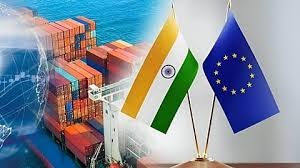

New Delhi: A comprehensive Free Trade Agreement (FTA) between India and the European Union could deliver an immediate export boost of approximately $5 billion in the first full year after implementation, according to fresh estimates by the commerce ministry and leading trade think-tanks.
The projected $5 billion incremental export opportunity in Year 1 is driven primarily by:
- Elimination / sharp reduction of EU tariffs on key Indian export categories (average applied tariff on Indian goods currently 4.2–12%)
- Preferential access for textiles & apparel, leather & footwear, gems & jewellery, marine products, chemicals, pharmaceuticals, engineering goods, processed food and electric vehicles / components
- Rules of origin that are considered “commercially meaningful” by Indian negotiators (expected 40–60% regional value content threshold)
Sector-wise Potential Gains (Year 1 Estimates)
| Sector | Current Exports to EU (2024) | Additional Potential (Year 1) | Key Items Benefiting |
|---|---|---|---|
| Textiles & Apparel | $9.8 bn | $1.4–1.7 bn | Garments, home textiles, made-ups |
| Leather & Footwear | $3.1 bn | $800–1,000 mn | Footwear, leather articles |
| Gems & Jewellery | $8.2 bn | $900–1,200 mn | Cut & polished diamonds, gold jewellery |
| Marine Products | $1.9 bn | $400–600 mn | Shrimp, fish fillets |
| Pharmaceuticals & Chemicals | $11.4 bn | $700–1,000 mn | Generics, APIs, specialty chemicals |
| Engineering & Auto Components | $12.6 bn | $600–900 mn | Auto parts, machinery, electrical goods |
| Total Incremental | — | ~$5 billion | — |
Source: Internal commerce ministry working paper + FIEO & GTRI estimates
Why the EU FTA Matters Now
- The EU is India’s third-largest trading partner after the US and China (bilateral goods trade ~$120 bn in 2024–25).
- India currently faces an average applied tariff disadvantage of ~6.5 percentage points on its top export items to the EU.
- Post-Brexit, the UK has already concluded an FTA with India (effective April 2025); the EU deal is seen as the next big “big-ticket” FTA after the UK.
- Successful conclusion would also strengthen India’s negotiating position in parallel talks with Canada, Australia (revised) and GCC countries.
Timeline & Current Status
- 18th round of negotiations concluded in Brussels in early December 2025.
- Chief negotiators are targeting “substantial conclusion” by Q2 2026.
- Final legal scrubbing and translation into 24 EU languages could push signing to late 2026 / early 2027.
- Implementation likely in 2027–2028 (phased tariff elimination over 7–10 years).
Market & Industry Reaction
- Auto & engineering exporters welcomed the news; SIAM and EEPC India said even a partial tariff cut on components could add $800–1,200 mn in the first year.
- Textile & leather associations called it a “lifeline” for SMEs that have lost market share to Bangladesh and Vietnam.
- Pharma companies expect faster growth in generics once non-tariff barriers are addressed in parallel SPS/TBT talks.
Conclusion
While the full economic impact of an India-EU FTA will unfold over 7–10 years (estimated long-term export gain $20–35 bn), analysts agree that the first-year incremental export boost of ~$5 billion is realistic, provided the final text retains commercially meaningful tariff elimination and rules of origin.
For Indian exporters — especially in labor-intensive and value-added manufacturing, the EU FTA is increasingly seen as the next big structural growth driver after the recently implemented UK and Australia FTAs.
