

Zero-Cost Transactions for Users to Continue; Finance Minister Says Banks and Fintechs Will Ramp Up Security Investments
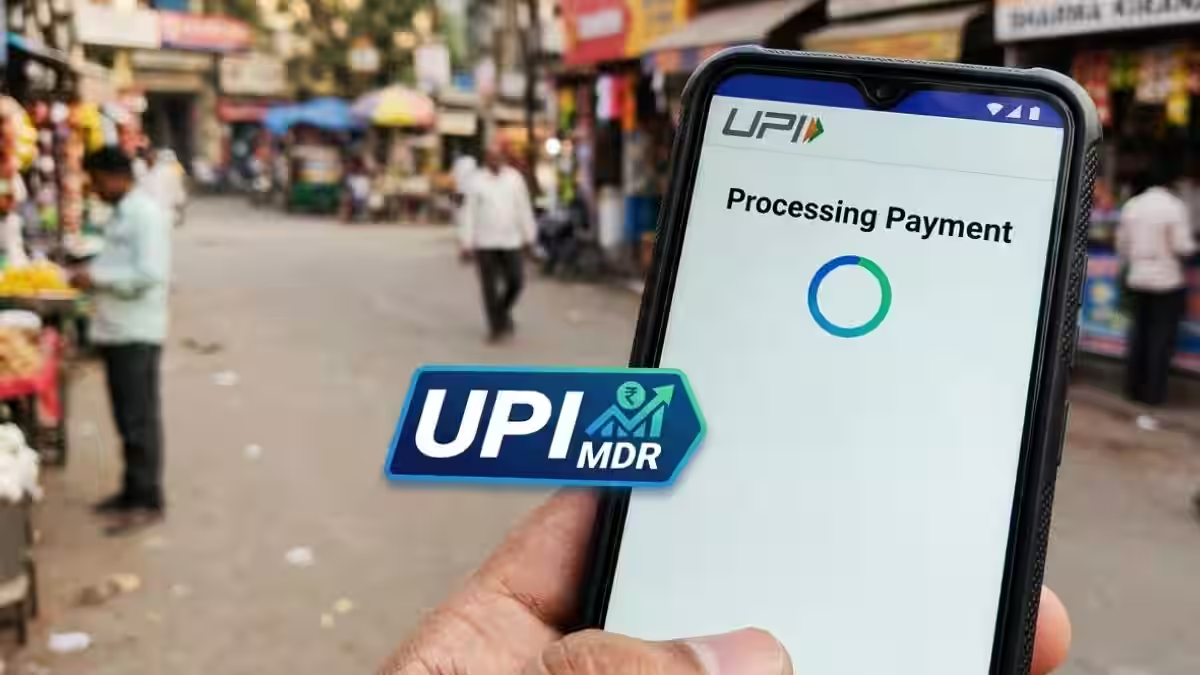
Finance Minister has clarified that the Merchant Discount Rate (MDR) on Unified Payments Interface (UPI) transactions applies to merchants and not to customers. The statement reaffirms that ordinary users will continue to enjoy zero-cost digital payments, while signaling that banks and fintech companies are expected to invest more heavily in strengthening the security of the payments ecosystem.
What the Finance Minister Said
Addressing concerns around the future of UPI charges, the Finance Minister made it clear that any MDR framework under discussion or implementation would be borne by merchants accepting digital payments. Customers making UPI transactions would not be charged. The clarification aims to put to rest speculation that end-users might face fees on the popular payments platform.
The minister also emphasised that greater participation and commercial sustainability in the UPI ecosystem would encourage banks, payment service providers and fintech firms to allocate more resources towards cybersecurity, fraud prevention and system resilience.
Why MDR Matters
Merchant Discount Rate is the fee that merchants pay to payment service providers and banks for accepting digital transactions. In the early years of UPI, MDR was largely waived or absorbed to drive rapid adoption. As transaction volumes have surged into hundreds of crores every month, the question of a sustainable commercial model has returned to the forefront.
By stating that MDR applies only to merchants, the government has sought to protect the core value proposition of UPI for consumers — free, instant and convenient payments — while allowing the industry to develop a viable revenue model on the merchant side.
Impact on Customers
For millions of Indians who use UPI daily for everything from grocery purchases to bill payments and peer-to-peer transfers, the clarification provides continuity. Zero MDR for customers has been one of the biggest drivers of UPI’s unprecedented growth. Any move to charge end-users could have risked slowing adoption or pushing some users back towards cash.
The minister’s statement ensures that the user experience remains unchanged even as the underlying economics of the system evolve.
Boost for Security Investments
A key part of the Finance Minister’s message was the expectation that banks and fintech companies will invest more in security. As transaction volumes and values rise, so do the risks of fraud, phishing and system vulnerabilities. A clearer commercial framework for MDR is expected to improve the ability of payment players to fund advanced fraud-detection systems, real-time monitoring, stronger authentication and customer awareness campaigns.
Industry observers note that sustainable revenue streams make it easier for companies to prioritise long-term investments in technology and compliance rather than focusing solely on volume growth.
Industry Reaction
Banks and fintech firms have broadly welcomed clarity on the MDR issue. Many had argued that a complete and permanent waiver made it difficult to recover costs associated with technology, compliance and customer support. A merchant-side MDR, if calibrated carefully, could restore commercial balance without hurting end-users.
At the same time, merchant bodies are likely to watch the final structure closely. Higher MDR rates could increase the cost of accepting digital payments, particularly for small retailers. Policymakers will need to strike a balance that keeps digital payments attractive for merchants while ensuring the system remains financially viable for providers.
Broader Digital Payments Context
UPI has transformed India’s payments landscape, making digital transactions mainstream even in smaller towns and among first-time users. The platform’s success is often cited as a global case study in public digital infrastructure. Maintaining trust and reliability is now as important as expanding reach.
The Finance Minister’s twin message protecting customers from charges while encouraging greater security spending reflects this maturing phase of the ecosystem. Growth is no longer the only priority; resilience, safety and sustainability have become equally critical.
Challenges Ahead
Implementation details will matter. The exact MDR rates, thresholds for small merchants, and any differential treatment for various categories of transactions will determine how the policy lands on the ground. Clear guidelines and phased introduction, if required, could help the market adjust smoothly.
Regulators and the National Payments Corporation of India (NPCI) are expected to play a key role in monitoring the impact on both merchants and payment providers.
Outlook
The clarification removes a major point of uncertainty for users and gives the industry a clearer path to build sustainable business models. If banks and fintechs respond by strengthening security infrastructure, the entire UPI ecosystem stands to benefit through higher trust and lower fraud losses.
For now, customers can continue using UPI without fear of transaction charges, while the industry prepares for a phase that balances growth with commercial viability and stronger safeguards.
