
Indian Army’s Electronic Warfare Capabilities Set for Major Upgrade: MoD Signs ₹1,476 Crore Contract with BEL

Five Advanced Ground-Based Mobile Electronic Systems to Bolster Tactical Battlefield Dominance and Self-Reliance in Defence
New Delhi: In a significant step towards modernising the Indian Army’s electronic warfare (EW) capabilities, the Ministry of Defence (MoD) has signed a ₹1,476 crore contract with Bharat Electronics Limited (BEL), Hyderabad, for the procurement of five Ground-Based Mobile Electronic Systems (GBMES).
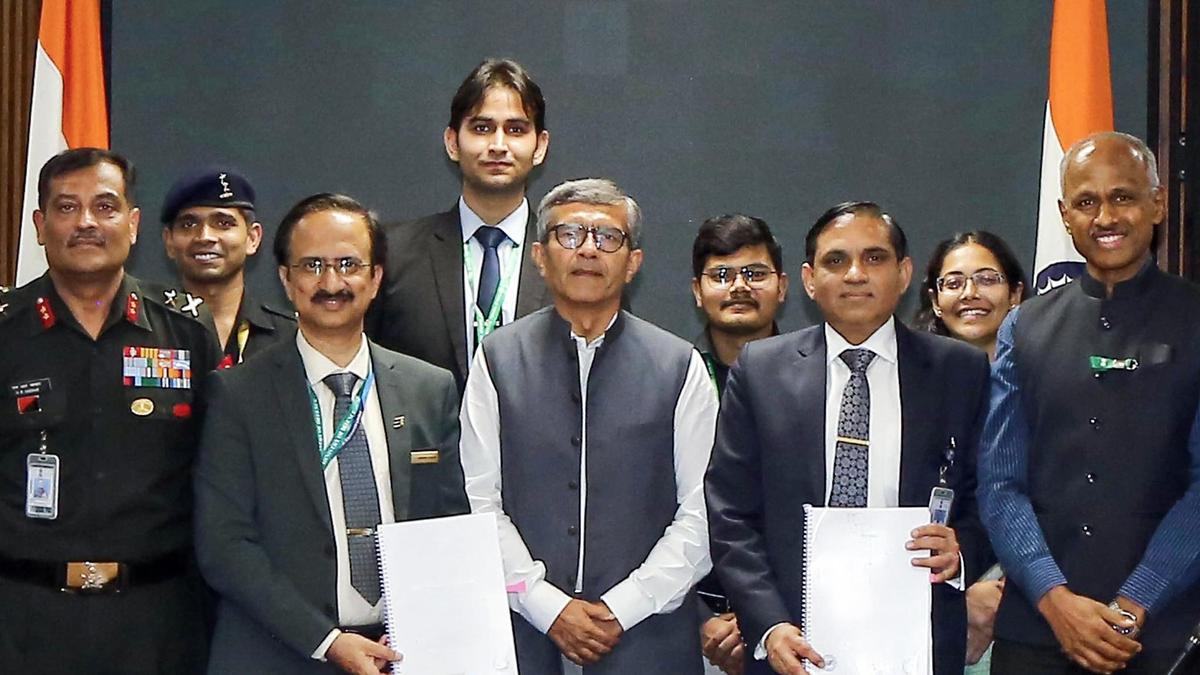
The contract was inked on May 5, 2026, in the presence of Defence Secretary Shri Rajesh Kumar Singh at Kartavya Bhawan, New Delhi. These systems, developed indigenously by DRDO’s Defence Electronics Research Laboratory (DLRL) in Hyderabad and manufactured by BEL, will be supplied under the Buy (Indian-IDDM) category with a minimum 72% indigenous content.
Enhancing Battlefield Awareness and Electronic Dominance
The GBMES are state-of-the-art, highly mobile platforms designed to provide advanced electronic surveillance, signal interception, direction finding, and jamming capabilities across the tactical battlefield. They will enable the Indian Army to detect, identify, and neutralise enemy radar emitters and communication networks in real-time, offering a decisive edge in modern network-centric warfare.
These systems are particularly crucial for operations along the Line of Actual Control (LAC) and Line of Control (LoC), where electronic warfare plays an increasingly vital role in disrupting adversarial command-and-control systems while protecting Indian forces.
Boost to Atmanirbhar Bharat
This contract aligns perfectly with the government’s vision of self-reliance in defence manufacturing. BEL, a Navratna Defence PSU, has been a key partner in delivering cutting-edge indigenous technologies to the armed forces. The deal is expected to create substantial opportunities for MSMEs and the domestic defence ecosystem through vendor development and technology absorption.
Senior officials noted that the systems incorporate the latest advancements in signal processing, artificial intelligence, and secure communication, making them among the most advanced mobile EW platforms in the region. Delivery timelines and performance guarantees have been clearly defined to ensure rapid operationalisation.
Strategic Significance
The induction of these five systems will significantly strengthen the Indian Army’s ability to conduct integrated electronic operations. In an era where wars are increasingly fought in the electromagnetic spectrum, such capabilities are no longer optional but essential for mission success and force protection.
Defence experts view this procurement as part of a broader modernisation drive under which the armed forces are rapidly upgrading their EW and cyber assets. It also sends a strong message about India’s growing indigenous defence manufacturing prowess to potential adversaries.
BEL’s Chairman and Managing Director expressed confidence that the systems would exceed operational expectations and further cement the company’s position as a global leader in defence electronics. The project is expected to generate direct and indirect employment while enhancing BEL’s export potential in the EW domain.
Part of Wider Defence Indigenisation Push
This latest contract adds to a series of recent high-value indigenous deals aimed at reducing reliance on foreign platforms. With a focus on platforms designed and developed within India, the government continues to prioritise technology transfer, skill development, and creation of a robust defence industrial base.
The Indian Army has been prioritising the acquisition of mobile, rugged, and network-enabled systems that can operate in high-altitude and extreme terrain conditions. The new GBMES are built to meet these exacting standards.
As geopolitical challenges evolve, investments in electronic warfare and information dominance are becoming central to India’s defence strategy. This ₹1,476 crore deal represents not just a procurement decision but a strategic investment in the Army’s future readiness.
The successful delivery and induction of these systems are expected to be completed within the stipulated timeframe, further strengthening India’s defence posture along its borders.
