

Ultra-Wealthy Club Expands as Combined Fortune Hits Record Levels; Raises Questions on Wealth Concentration and Economic Power
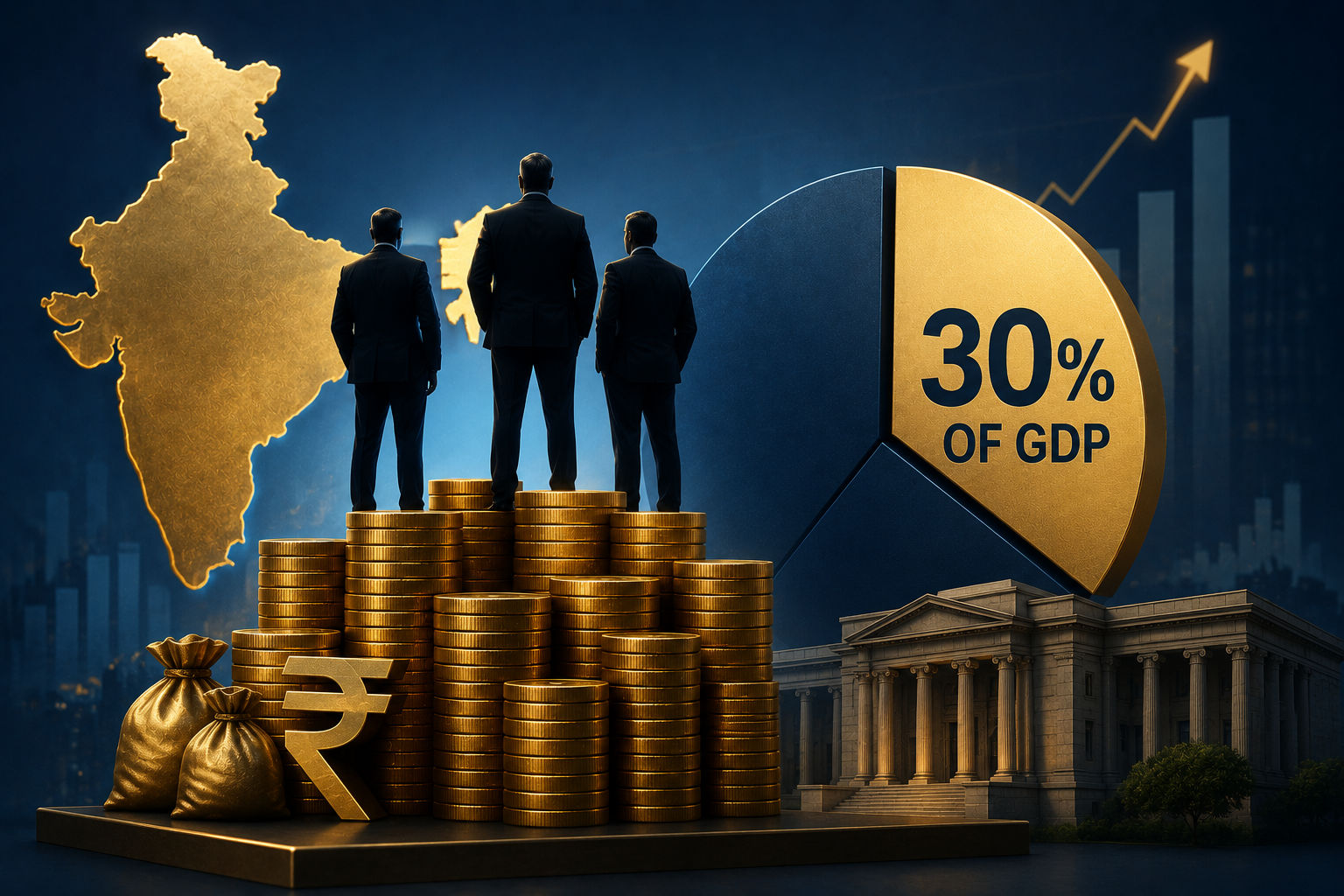
India’s richest 3,040 individuals now collectively hold wealth worth approximately Rs 104 lakh crore, a sum equivalent to nearly 30% of the country’s GDP. The figures highlight the extraordinary concentration of wealth at the very top of the economic pyramid and underscore how rapidly fortunes have grown among the nation’s ultra-rich.
The Scale of Wealth
According to the latest wealth estimates, the combined net worth of these 3,040 individuals has reached Rs 104 lakh crore. This marks a significant increase from previous years and reflects strong gains in equity markets, business expansion and asset appreciation. The fact that such a small group controls wealth equal to almost a third of national GDP underlines the scale of economic power concentrated in a few hands.
The list typically includes industrialists, founders of technology and consumer companies, professional investors and heirs of large business families. A substantial portion of this wealth is linked to listed companies, making stock market performance a key driver of the overall increase.
Drivers of Wealth Creation
Several factors have contributed to the rise in ultra-wealthy fortunes:
- Robust equity market gains over recent years
- Expansion of domestic consumption and enterprise value
- Growth of new-age businesses in technology, renewables and manufacturing
- Rising valuations of traditional conglomerates
- Strategic investments and global expansion by Indian promoters
The post-pandemic recovery, combined with policy support for manufacturing and infrastructure, has further boosted corporate earnings and, by extension, promoter wealth.
Wealth Concentration and Inequality
While the growth of wealth at the top reflects entrepreneurial success and capital formation, it also draws attention to the widening gap between the ultra-rich and the rest of the population. Economists note that such concentration can influence consumption patterns, investment flows and even policy priorities.
At the same time, supporters of wealth creation argue that large fortunes often translate into job creation, capital investment and philanthropy. Many of India’s richest individuals and families have expanded businesses that employ millions and contribute significantly to tax revenues.
Role of Equity Markets
A large share of the Rs 104 lakh crore is tied to stock market holdings. As domestic and foreign investors have poured money into Indian equities, market capitalisation has surged, directly lifting the net worth of promoters and early investors. This has made wealth more visible and more volatile, rising and falling with market cycles.
Financial planners caution that paper wealth can fluctuate sharply, and that liquidity and diversification remain important even for the ultra-rich.
Regional and Sectoral Patterns
Wealth remains concentrated in certain regions and sectors. Traditional business hubs continue to dominate, while new fortunes have emerged from technology, pharmaceuticals, renewable energy and consumer brands. The rise of first-generation entrepreneurs alongside established business houses has added diversity to the rich list, even as overall concentration remains high.
Policy and Social Implications
The growing scale of private wealth has implications for taxation, regulation and social policy. Debates around wealth taxes, inheritance rules and corporate governance periodically surface in public discourse. Policymakers face the challenge of encouraging enterprise while ensuring that growth remains inclusive.
Philanthropy has also gained prominence, with several ultra-rich individuals committing resources to education, healthcare and social development. Whether such efforts can meaningfully address broader inequality remains a subject of ongoing discussion.
Global Context
India’s ultra-rich are increasingly visible on global wealth rankings. As the economy expands, the number of dollar millionaires and billionaires has risen, placing India among the top countries in terms of new wealth creation. This trend mirrors the experience of other fast-growing economies where rapid capital accumulation accompanies structural transformation.
Outlook
The Rs 104 lakh crore club is likely to expand further if economic growth remains strong and markets stay supportive. However, global uncertainties, commodity price shocks and domestic policy shifts could influence the trajectory of wealth creation.
For now, the numbers serve as a powerful snapshot of India’s economic duality a nation generating extraordinary private wealth even as it continues to grapple with the challenge of spreading prosperity more widely.
