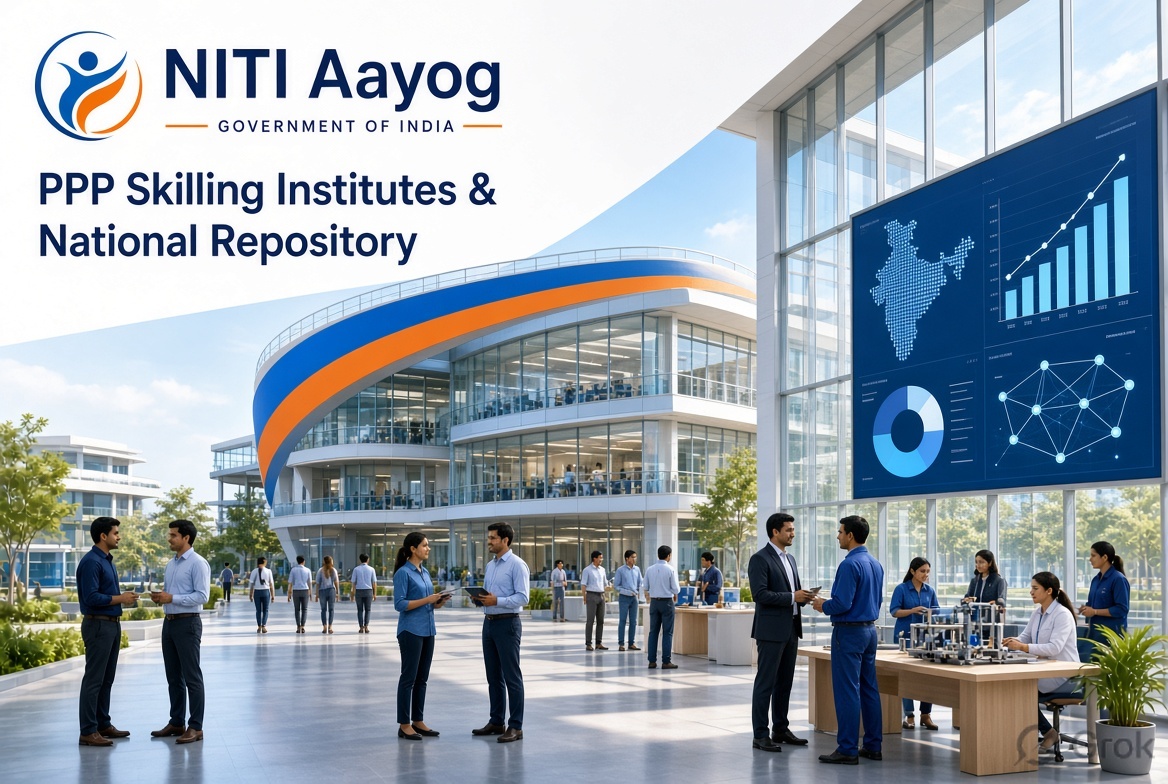
NITI Aayog proposes PPP skilling institutes, hubs and national repository to track college salaries, placements

Report ‘Reimagining Skilling for Viksit Bharat@2047’ seeks to align higher education with industry needs through public-private partnerships and transparent career outcome data
NITI Aayog has recommended setting up public-private partnership (PPP) skilling institutes and hubs in higher education while creating a national digital repository to track salaries, placements and career outcomes across colleges and programmes. The proposals form part of the think tank’s report Reimagining Skilling for Viksit Bharat@2047, which calls for a structural shift from enrolment-focused skilling to outcome-linked systems that better connect education with jobs.
PPP models to bridge education-industry gap
The report outlines three complementary PPP models to reorient technical and higher education towards labour-market demand.
The first is a greenfield approach: dedicated PPP skilling institutes or universities that would offer outcome-linked, industry-integrated and modular degree or diploma programmes designed around specific sector and regional needs.
The second involves creating PPP skilling hubs as stand-alone centres within existing universities and colleges, focused on measurable employment and career results.
The third is a brownfield model that applies PPP frameworks to reform and modernise current institutions.
These partnerships aim to expand private-sector participation, update curricula with industry input, embed job-linked learning, and introduce greater flexibility and accountability. The report notes that many existing programmes prioritise enrolment and completion over placement, progression or income outcomes, leaving a mismatch between what students study and what employers require.
National Career Outcome Repository for transparent data
Alongside institutional reforms, NITI Aayog has proposed a National Career Outcome Repository as a “shared digital public good.”
The platform would aggregate verified data on wages, job roles, sectors, demand trends, internship and placement rates, and longer-term career trajectories from education and skilling programmes. Institutions would be expected to publish completion, placement and salary results, with the repository showcasing alumni pathways, progression timelines and potential returns on investment.
Information would be made available through a national digital platform integrated with state dashboards and accessible via schools, colleges and social media. The repository is designed to help students and parents make informed choices based on actual outcomes rather than perceptions, while giving policymakers and institutions a common evidence base to align training with market needs. It would sit within a broader digital architecture that includes a Skills Digital Registry and Exchange.
Why the reforms matter
The recommendations come against the backdrop of persistent employability challenges. Only a small share of graduates work in roles aligned with their qualifications, and large numbers of youth remain outside education, employment or training.
By combining stronger industry collaboration in colleges with publicly available data on real career results, NITI Aayog aims to make higher education more responsive, accountable and relevant to the job market, supporting India’s Viksit Bharat@2047 vision.
