
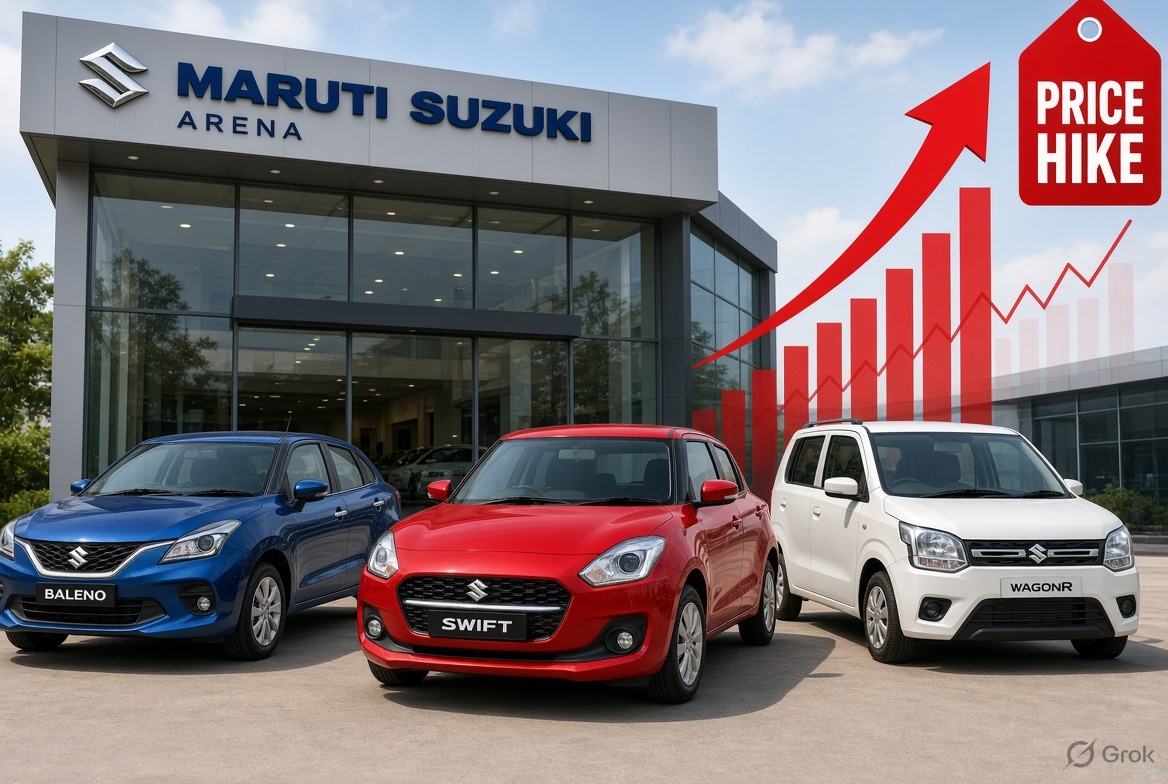

Volume-weighted average increase of 0.31% from November 22; follows earlier hikes exceeding 1% in H1 FY27
Maruti Suzuki India, the country’s largest carmaker, has raised prices of select models effective November 22, 2026. The volume-weighted average increase is estimated at 0.31 per cent. The company said the revision is necessary because of sustained cost pressures from higher input expenses.
What the company said
In an official statement, Maruti Suzuki noted: “In view of the sustained cost pressures, the company has decided to increase prices of select models, effective 22nd November 2026.” The company added that it has tried to keep the impact on customers limited while passing on part of the higher costs. Specific models and the exact increase for each variant have not been disclosed.
This is the fourth price adjustment by Maruti in the current financial year. In the first half of FY27 the company had already implemented three rounds of hikes that cumulatively exceeded 1 per cent. Industry watchers say continued increases reflect the difficulty of fully absorbing rising raw-material and component costs.
Reasons behind the hike
Maruti has pointed to higher input costs as the main driver. Part of the pressure is linked to the ongoing situation in West Asia, which has affected commodity prices and logistics. Despite internal cost-reduction measures, the company said some of the burden had to be passed on. The modest 0.31 per cent average increase suggests the firm is trying to balance margin protection with demand sensitivity in a competitive market.
Broader financial context
The price move comes against a mixed performance backdrop. In the July-September quarter (Q2 FY27), Maruti’s consolidated net profit fell 26.36 per cent year-on-year to ₹2,466.1 crore. Operating EBITDA margin contracted to 9.4 per cent from 12.7 per cent in the same period last year. The drop in profitability occurred even though the company recorded its highest-ever quarterly vehicle sales volumes.
On the volume side, domestic dispatches in April-September rose 31.6 per cent to 11.46 lakh units. The company has guided for double-digit volume growth in the second half of FY27, supported by festive demand, a healthy order backlog and better-managed dealer inventory. The latest price revision is therefore seen as an attempt to support margins without derailing the volume recovery.
Industry implications
Rising input costs have been a recurring theme across the Indian auto industry. Several manufacturers have taken price increases over the past year as steel, aluminium, plastics and logistics costs remained elevated. Maruti’s decision is likely to be watched closely by competitors. Any widespread follow-through could push up overall vehicle prices and influence buyer decisions in the entry and mid-size segments where Maruti is strongest.
At the same time, strong festive demand and a robust order book give the company some room to implement the hike. Buyers who have already booked vehicles at older prices are expected to be protected, while new bookings from November 22 will reflect the revised rates. The company has not indicated whether further increases are planned in the near term.
What it means for customers
For most buyers the absolute impact of a 0.31 per cent average hike will be limited, though it will vary by model and variant. Entry-level cars, where margins are thinner, may see relatively smaller absolute increases, while higher-end variants could absorb more. Dealers are expected to update price lists immediately. Customers comparing models across brands may factor the new rates into their decisions, especially if rival manufacturers hold prices steady for longer.
Outlook
Maruti’s target of double-digit volume growth in H2 FY27 rests on continued festive momentum and a strong order pipeline. The modest nature of the latest increase suggests the company is prioritising volume while trying to recover some of the margin erosion seen in the second quarter. How competitors respond and how input costs evolve in the coming months will determine whether further price actions become necessary.
The move underscores the delicate balance carmakers face between protecting profitability and sustaining demand in a price-sensitive market. With the West Asia situation still unresolved and commodity prices remaining volatile, cost pressures are unlikely to disappear quickly. Maruti’s successive adjustments this year indicate that manufacturers are prepared to act when cumulative cost increases become difficult to absorb fully.
