
Conglomerate Targets 7.85–7.90% Coupon Before RBI’s October 7 Policy; Follows ₹12,000 Crore Five-Year Issue Two Weeks Ago
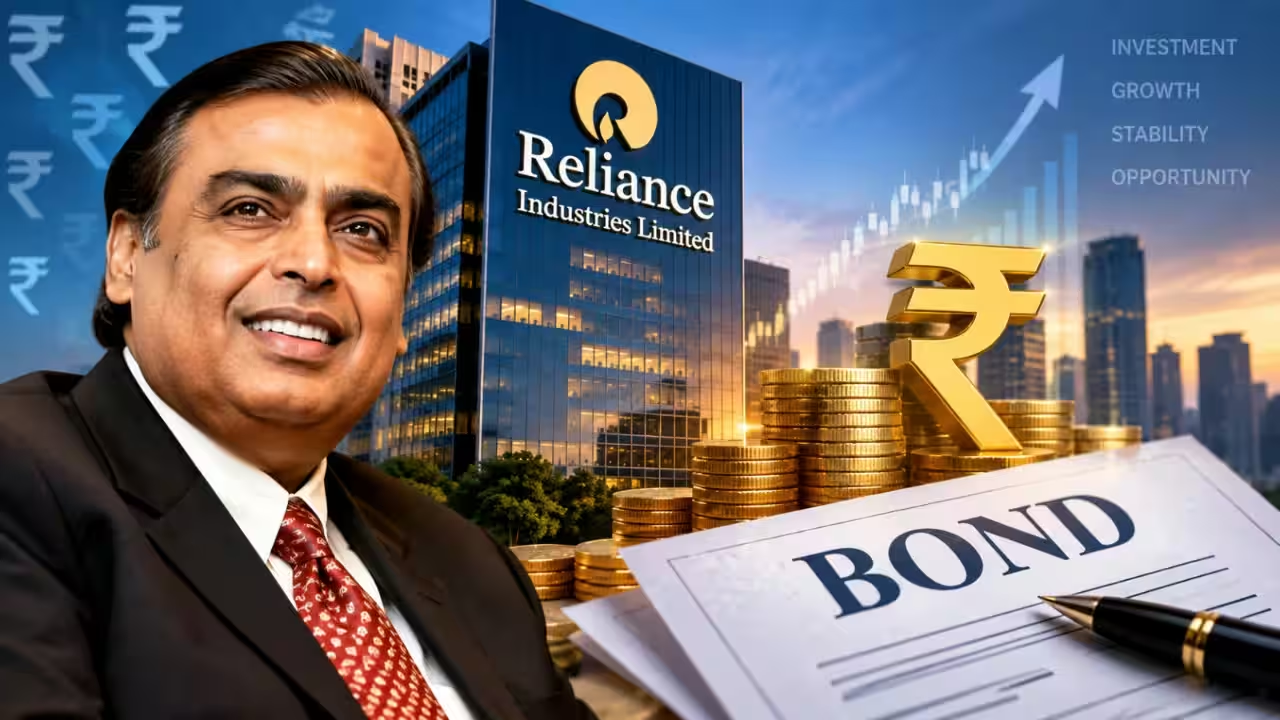
Reliance Industries is preparing to raise about ₹10,000 crore through 10-year rupee bonds as early as next week, joining a wave of companies tapping surplus liquidity in the banking system before the Reserve Bank of India’s monetary policy decision on October 7.
Bankers familiar with the plan said the notes are expected to carry a coupon of around 7.85–7.90 per cent. Bids may be invited next week or the week after. Reliance did not immediately comment.
Second Tranche in a Month
The sale would be the second large rupee issue from the group in a short span. About two weeks ago Reliance raised ₹12,000 crore via five-year papers at 7.47 per cent its first local-currency bond sale since November 2023, when it raised ₹20,000 crore in what was then the largest such deal by an Indian non-financial company.
If the 10-year tranche is completed, outstanding Reliance bonds would rise to about ₹54,000 crore. Large private banks are expected to arrange the issue and subscribe to part of it.
Why Companies Are Borrowing Now
Surplus liquidity has made domestic credit relatively easy to place. At the same time, US Treasury yields have risen sharply, making dollar debt less attractive. Rupee bonds at the mid-to-high 7 per cent area for a top-rated 10-year name look cheaper than offshore funding for many borrowers.
Issuers also want to lock in money before the October 7 policy review. Markets are watching whether the RBI will tighten after inflation has firmed. A hike, or even a hawkish tone, could push corporate yields higher. Completing a large issue beforehand is standard treasury practice.
Others in the Queue
The same liquidity window is drawing a crowd. On Friday, issuers including Adani Airport Holdings (₹1,000 crore for three years at 8.96 per cent), Small Industries Development Bank of India (up to ₹6,000 crore for three years), Aditya Birla Capital (₹1,000 crore for three years) and JSW Energy (₹500 crore for seven years) were slated to raise more than ₹14,500 crore between them.
The contrast in coupons is telling: a three-year Adani Airport note at nearly 9 per cent versus a 10-year Reliance bond near 7.9 per cent. Credit quality and tenor still price very differently even in a liquid market.
What the Money Is For
Reliance has not specified use of proceeds for this tranche. The group’s capital needs span energy, telecom, retail and new energy. Bond proceeds typically refinance existing debt, fund projects or keep cash buffers flexible. Investors will look at leverage, capex guidance and how the extra ₹10,000 crore sits beside the recent five-year raise.
Market Implications
A ₹10,000 crore 10-year print from India’s largest private company is a benchmark in itself. The final coupon will tell banks and other corporates where long-end AAA-equivalent paper clears when liquidity is ample. If the deal is tightly bid, more issuers may follow before the policy meeting. If demand is thin, the “rush” narrative will fade quickly.
For banks, subscribing to high-grade corporate bonds is one way to deploy surplus funds. For bond investors, the choice is between locking 7.9 per cent for a decade with Reliance or waiting to see whether policy tightens and yields offer more.
Risks and Watchpoints
Liquidity can reverse if the RBI drains surplus or if credit demand from other sectors jumps. Inflation and global yields remain the swing factors. A messy geopolitical or oil shock could also reopen the gap between domestic and dollar funding.
Reliance’s dual-tranche approach five years first, ten years next ladders maturity and tests two points on the curve. Execution before October 7 is the near-term test.
Outlook
The planned issue is less a distress raise than a timing trade: cheap local money, an uncertain policy date, and a borrower that can clear size. Together with Friday’s cluster of deals, it shows the corporate bond market is open and competitive. Whether that window stays open after the RBI speaks will decide if this week’s rush was the peak of the cycle or only the first wave.
