

New US Duties Aim to Curb Foreign Dependence and Boost Domestic Drone Manufacturing; Indian Drone and Defence Stocks in Focus
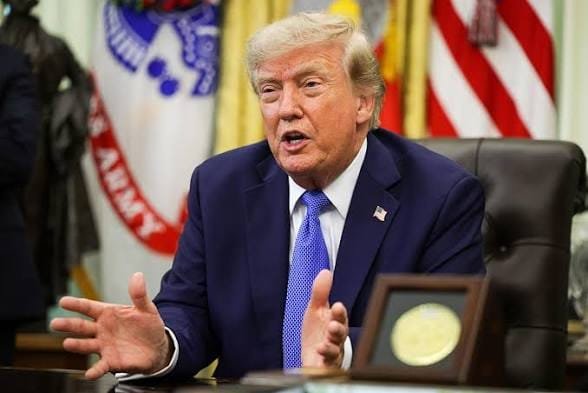
US President Donald Trump has announced steep tariffs on imported drones and related components, imposing a 100% duty on larger or national-security-sensitive unmanned aircraft systems and a 25% levy on smaller models. The move, framed as a national security measure, seeks to reduce America’s reliance on foreign drone supplies and encourage domestic production.
Details of the Tariff Structure
According to the White House proclamation, a 100% ad valorem tariff will apply to drones exceeding a certain size (notably those with maximum takeoff weight over 25 kg) or those equipped with sensitive capabilities such as thermal imaging, as well as docking stations and specified critical components.
Smaller drones that lack these sensitive features will attract a 25% tariff.
Preferential lower rates apply to certain partners: up to 15% for the European Union, Japan, South Korea, Taiwan, Switzerland and Liechtenstein, and 10% for the United Kingdom, provided substantially all hardware, software and technology originates from those countries or the US.
The tariffs are scheduled to take effect in phases, with many provisions beginning in about 21 days and some component duties delayed to allow time for onshoring.
Stated Rationale
The administration argued that the United States has become overly dependent on foreign sources for unmanned aircraft systems (UAS) and critical components such as motors, controllers and batteries. Officials linked the measure to security and supply-chain vulnerabilities. Companies that commit to significant new investment in US manufacturing may seek relief through an onshoring programme.
Impact on Global Drone Trade
China has long dominated the commercial and consumer drone market. The high tariffs are expected to raise costs for imported systems in the US, potentially accelerating efforts by American and allied manufacturers to scale production. At the same time, exporters from other countries will face higher barriers unless they qualify for the reduced rates or shift production.
Which Indian Stocks May Be Affected?
India’s drone sector is still developing but has gained momentum under domestic production incentives and defence modernisation programmes. The US tariffs could have mixed implications for listed Indian companies:
- ideaForge Technology: As one of India’s leading listed pure-play drone manufacturers, the company could see longer-term opportunities if global buyers seek non-Chinese alternatives. However, any direct exports to the US may face higher duties, affecting short-term competitiveness in that market.
- Paras Defence and Space Technologies: Involved in defence electronics and related systems; sentiment in the broader defence and aerospace space often moves with policy shifts favouring diversification of supply chains.
- Zen Technologies and other defence electronics players: Companies supplying simulators, counter-drone systems or related technology may benefit indirectly from increased focus on indigenous and allied capabilities.
- Larger defence names (HAL, BEL, Bharat Dynamics): While not pure drone plays, positive sentiment around defence manufacturing and “China+1” sourcing can support the sector.
- Negative pressure risk: Any Indian firms with meaningful drone or component exports specifically to the US could face margin pressure or reduced volumes until they adapt supply chains or secure exemptions.
Overall, domestic-focused Indian drone makers may gain from global realignment and stronger policy support at home, while pure export exposure to the US market faces headwinds.
Broader Context and Outlook
The tariffs form part of a wider US push to reshore critical technologies. For India, the development reinforces the importance of building competitive domestic drone capabilities for both civilian and defence use. Companies that invest in technology, quality certifications and diversified markets will be better positioned.
Investors will monitor how quickly US buyers shift sourcing, whether Indian manufacturers can capture any redirected demand, and the response of global drone majors. In the near term, volatility in defence and specialised manufacturing stocks is possible as markets digest the policy details.
